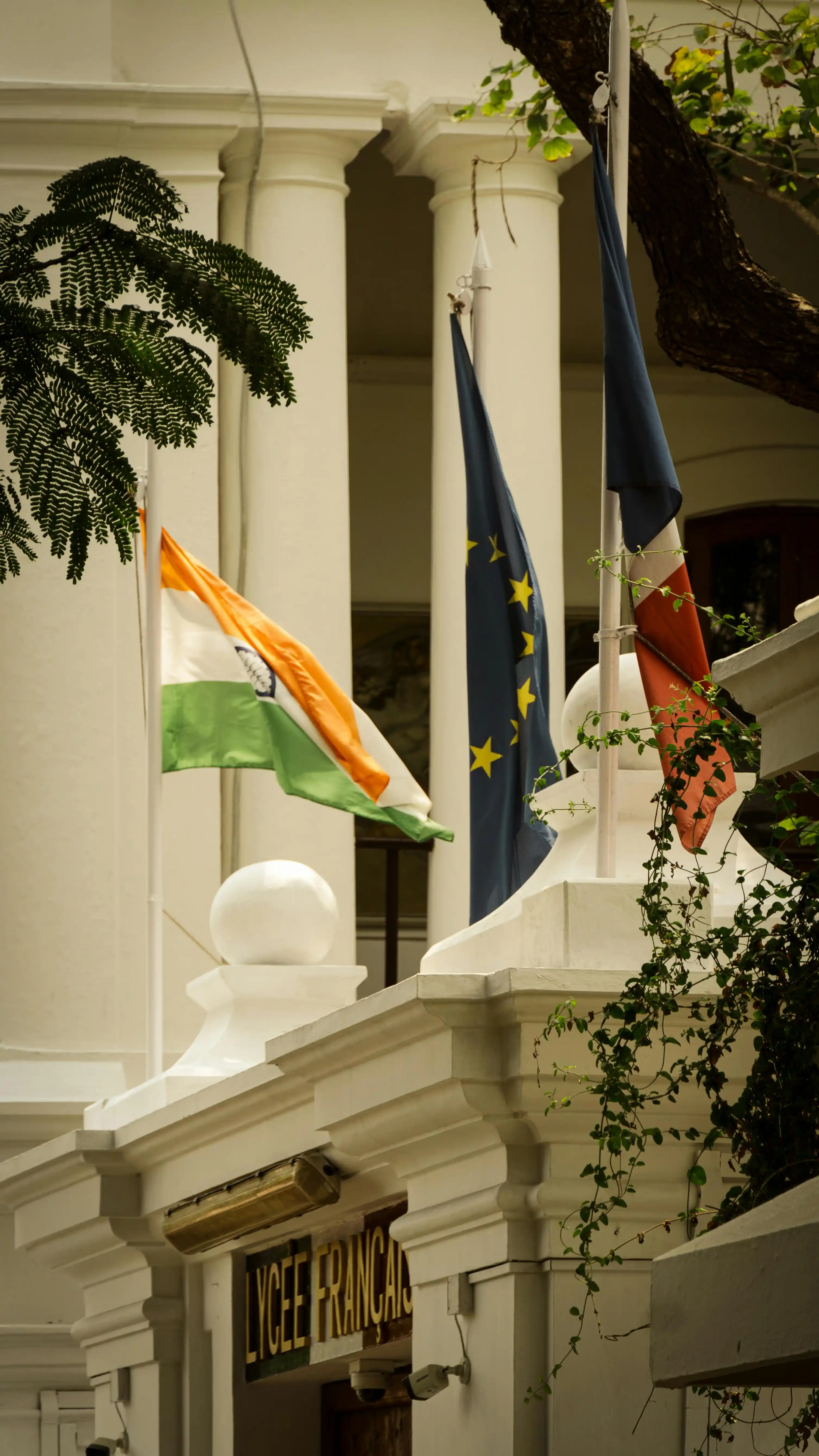


You have your admission letter, your visa is stamped, and your flight is booked. But what does life in France actually feel like as an Indian student? The Instagram-worthy Eiffel Tower shots and croissant breakfasts are real - but so is the culture shock of shops closing on Sundays, the struggle to find proper chai, the loneliness of your first week when everything is in a language you barely understand, and the unexpected joy of discovering that a €1 baguette is genuinely the best bread you have ever tasted. This guide covers the real, unfiltered experience of student life in France - the good, the challenging, and the surprising.
A Typical Day as an Indian Student in France
Student life in France follows a rhythm that is noticeably different from India. The pace is slower, lunch is sacred, and the boundaries between 'work time' and 'personal time' are much clearer. Here is what a typical weekday looks like for most Indian Masters students.
Morning Routine
Wake up, quick breakfast (tea/coffee + toast, cereal, or leftover roti from last night). French students eat croissants and tartines - you will eventually adopt a mix of both. Check the weather - French weather changes constantly, layers are essential.
Morning Classes (Cours Magistraux / TD)
Lectures (cours magistraux) in large halls or tutorial sessions (travaux dirigés) in smaller groups. French academic style is more lecture-heavy and less interactive than Indian or US classrooms. Take notes - exams are based heavily on lecture content. Most classes start exactly on time (unlike the Indian 'flexible' start).
Lunch Break (La Pause Déjeuner)
This is sacred in France. The CROUS restaurant (RU - Restaurant Universitaire) offers a full meal for €3.30 (€1 for scholarship students). Starter + main course + dessert. The food is surprisingly good - and this is where you save the most money. Many students eat their main meal here. Eating at your desk is culturally frowned upon.
Afternoon Classes or Lab Work
More classes, lab sessions, group projects (travaux pratiques), or library time. French universities emphasize group projects more than Indian ones. Your group will likely be a mix of French, European, and international students - this is where you make friends.
Free Time / Part-Time Work
Some students head to their part-time job (babysitting, restaurant, tutoring). Others go to the library (BU - Bibliothèque Universitaire), gym, or explore the city. University sports facilities are cheap (€30-€50/year). This is also a good time for FLE (French language) classes if your university offers them.
Dinner - The Indian Cooking Hour
Most Indian students cook dinner at home - dal, rice, sabzi, roti. Indian groceries are available in most cities (more on this below). Cooking is the #1 money-saving strategy and a social bonding activity. Flatmates often cook together. French students eat dinner later than Indians - 8:00-9:00 PM is normal.
Evening / Study
Study, assignments, Netflix (French shows with subtitles - great for learning French), video calls to family in India (time difference: France is 3.5-4.5 hours behind India), or socialising with friends. French student social life often revolves around apéros (pre-dinner drinks with snacks) - you will be invited to many.
Food - The Big Question for Indian Students
Let's address the elephant in the room: food. For most Indian students, this is the biggest adjustment. French food is excellent but very different from Indian cuisine - less spicy, more dairy-based, and centered around bread, cheese, and meat. Here is the practical reality.
Cooking at Home (Main Strategy)
80%+ of Indian students cook at home regularly. Rice, dal, sabzi, and roti are cheap to make. Basmati rice: €2-€4/kg at Asian stores. Lentils (masoor, chana): €2-€3/kg. Fresh vegetables: €1-€3/kg at markets. Spices: available at Indian/Asian stores in every major city (Paris, Lyon, Toulouse, Grenoble all have Indian stores). Monthly grocery budget if cooking: €100-€150.
CROUS Restaurant (Best Value)
The university restaurant (RU) offers complete meals for €3.30 (starter + main + dessert + bread). Quality is decent - French cafeteria food is better than you expect. Options usually include meat, fish, and vegetarian choices (specify 'végétarien' when ordering). Open Monday-Friday for lunch (sometimes dinner). This is the cheapest way to eat outside - use it daily.
Where to Buy Indian Groceries
Every major French city has Indian/South Asian grocery stores: Paris (La Chapelle/Gare du Nord area has dozens), Lyon (Rue Moncey), Toulouse, Grenoble, Strasbourg. They stock: atta, basmati, all spices, paneer, Indian pickles, papad, ready-to-eat packets, chai patti, and snacks. Prices are 2-3x India but manageable. Lidl and Aldi are the cheapest supermarkets for basics.
Eating Out
Restaurant meals: €12-€25. Kebab/shawarma (the student staple): €5-€8. Indian restaurants: €12-€18 for a thali. Pizza/fast food: €5-€10. Eating out daily is expensive - save it for weekends or social occasions. French bakeries (boulangeries) are cheap: baguette €1.20, pain au chocolat €1.30, sandwich €4-€6. The boulangerie will become your best friend.
The Vegetarian Question
France is not the easiest country for vegetarians - French cuisine is meat-and-dairy heavy. However, it is completely manageable. CROUS restaurants always have a vegetarian option (ask for 'le plat végétarien'). Supermarkets have good vegetable selections. Indian cooking at home is inherently vegetarian-friendly. Many restaurants now offer vegetarian/vegan options (look for 'V' or 'végan' on menus). Paris and Lyon have dedicated vegetarian restaurants. Tell people 'je suis végétarien(ne)' and they will understand - vegetarianism is growing in France. Vegan is harder but possible in major cities.
Culture Shock - What Surprises Indian Students
India vs France - Cultural Differences That Matter
India
Open (most)
France
Closed (most shops, except bakeries and some supermarkets)
Advice
Shop on Saturday. Plan your week.
India
Flexible, eating at desk is normal
France
Lunch 12:30-2:00 is sacred, eating at desk is frowned upon
Advice
Embrace the long lunch - it's a feature, not a bug
India
Namaste, handshake
France
La bise (cheek kisses) between friends/acquaintances
Advice
Follow the French person's lead. 2 bisous in most regions.
India
Frustrating but familiar
France
Extremely bureaucratic - everything needs a paper/attestation
Advice
Keep every document. Get everything stamped. Make copies.
India
Flexible, crowded is normal
France
Strong personal boundaries, privacy valued
Advice
Don't ask personal questions too early (salary, religion, politics)
India
IST (Indian Stretchable Time)
France
Be on time for classes, appointments, and trains
Advice
French trains leave exactly on time. So do classes.
India
Family gatherings, festivals
France
Apéro (pre-dinner drinks), dinner parties, café culture
Advice
Accept every apéro invitation - this is how French people bond
India
Loud is normal, honking everywhere
France
Quiet is valued, noise complaints are real
Advice
Respect quiet hours (10 PM - 8 AM) - your neighbours will complain
India
The customer is always right
France
The customer is just another person
Advice
Don't expect Indian-style service. Say 'Bonjour' before asking anything.
India
Work culture is intense
France
35-hour work week, 5 weeks vacation
Advice
Embrace it. Don't send emails at 10 PM.
The 'Bonjour' Rule
This is the single most important cultural rule in France: always say 'Bonjour' (hello) before any interaction - entering a shop, talking to a receptionist, asking for directions, starting an email. Not saying Bonjour is considered rude in France. It is the equivalent of greeting someone before speaking to them. 'Bonjour' + a smile opens doors. Forgetting it gets you cold stares. Once you internalize this, your daily interactions in France will improve dramatically.
Student Discounts - Your Secret Weapon
France is incredibly generous with student discounts. Your student card (carte d'étudiant) is a magic pass that unlocks savings across almost every aspect of life. Always ask 'tarif étudiant?' before paying for anything.
Student Discounts Available in France
- ✓Transport: 50% off monthly passes in most cities (Imagine R in Paris: ~€40/month instead of €80+). SNCF Carte Avantage Jeune (€49/year) gives 30% off all trains
- ✓Museums: Free entry to ALL national museums for EU students under 26. Non-EU students get free/reduced entry on first Sundays of each month at many museums
- ✓Cinema: Reduced tickets €5-€7 (instead of €12-€14). MK2, UGC, and Pathé offer student subscriptions for unlimited movies at ~€20-€25/month
- ✓Food: CROUS restaurant meals at €3.30. Many restaurants offer 'menu étudiant' at reduced prices
- ✓Phone: Free Mobile offers a plan at €2/month (calls + texts + some data). €8-€10/month plans from Free, SFR, Bouygues cover most needs
- ✓Software: Microsoft Office 365 free through university. GitHub Student Developer Pack. JetBrains free. Adobe discounted
- ✓Sport: University sports (SUAPS/SIUAPS) for €30-€50/year - access to gym, swimming, football, badminton, tennis, dance, martial arts, and more
- ✓Travel: Flixbus student fares, Ryanair/EasyJet flash sales from €15-€30 to other European cities. BlaBlaCar (French carpooling app) for cheap intercity travel
- ✓Shopping: 10% off at Fnac, Apple Education pricing, student discounts at H&M, ASOS, and many more via UNiDAYS app
- ✓Banking: Free student bank accounts at BNP Paribas, Société Générale, LCL. No account fees. Free debit card
Weekend Travel - Europe at Your Doorstep
One of the best perks of studying in France: Europe is tiny. Weekend trips to other countries cost less than a Delhi-Mumbai flight. Your French student visa (VLS-TS) lets you travel freely across all 27 Schengen countries - no additional visa needed.
Weekend Trips from France - Budget Prices
From
Paris/Toulouse/Montpellier
Transport
Ryanair / FlixBus
Budget Price
€15-€50
Flight Time / Travel
1.5 hrs fly / 6 hrs bus
From
Paris/Lille
Transport
Thalys train / Ryanair
Budget Price
€25-€60
Flight Time / Travel
3 hrs train / 1 hr fly
From
Paris/Lille
Transport
Thalys / FlixBus
Budget Price
€15-€35
Flight Time / Travel
1.5 hrs train / 3 hrs bus
From
Lyon/Grenoble
Transport
TER train / FlixBus
Budget Price
€15-€30
Flight Time / Travel
2 hrs train
From
Paris/Lille
Transport
Eurostar
Budget Price
€39-€78
Flight Time / Travel
2.5 hrs train
From
Paris/Lyon/Nice
Transport
Ryanair / EasyJet
Budget Price
€20-€60
Flight Time / Travel
2 hrs fly
From
Paris/Strasbourg
Transport
FlixBus / Ryanair
Budget Price
€20-€50
Flight Time / Travel
1.5 hrs fly / 12 hrs bus
From
Paris/Strasbourg
Transport
Ryanair / FlixBus
Budget Price
€20-€50
Flight Time / Travel
1.5 hrs fly
Travel Hacks for Students
Book Ryanair and EasyJet flights 4-6 weeks in advance for the best prices. FlixBus is always the cheapest option (€5-€20 for most European routes). BlaBlaCar (French carpooling app) is excellent for intercity travel within France (€10-€30 Paris to Lyon). Buy the SNCF Carte Avantage Jeune (€49/year) for 30% off all French trains. Travel during off-peak times (Tuesday/Wednesday) for the cheapest fares. Many hostels in European cities cost €15-€25/night - book on Hostelworld or Booking.com.
Making Friends and Social Life
Social life in France revolves around different rituals than India. There are no Diwali parties or cricket matches (yet) - but there are apéros, soirées, university associations, and a café culture that becomes deeply enjoyable once you adapt.
University Associations (BDE / Clubs)
Every French university has a BDE (Bureau des Étudiants) - a student union that organises parties, trips, sports events, and cultural activities. Join your programme's BDE and at least one club (sports, photography, theatre, music, cooking). This is the #1 way to meet French students and other internationals. Most associations charge €5-€20/year membership.
Apéro Culture
The apéro (apéritif - pre-dinner drinks + snacks) is France's main social ritual. Someone invites you for an apéro, you bring a bottle of wine (€3-€5 is fine) or snacks, and you spend 2-3 hours chatting. This is how French people bond. Say yes to every apéro invitation, especially in your first months. Bring samosas or Indian snacks - French people love trying different food.
Indian Student Community
Every major French city has an Indian student community - find them on Facebook ('Indians in Lyon', 'Indian Students in Toulouse'), WhatsApp groups (ask your seniors), and through Indian associations. These groups celebrate Diwali, Holi, and Independence Day. They are your safety net for the first months - but don't stay exclusively in the Indian bubble. Branch out.
Sports & Activities
University sports (SUAPS) are incredibly cheap: €30-€50/year for access to gym, swimming, and 20+ sports. City sports clubs offer reduced student rates. Running groups, hiking clubs (especially in Grenoble, Toulouse), cycling groups - France has strong outdoor culture. Sports are the best way to meet French people outside of academics.
Mental Health and Homesickness
Let's be honest: the first 1-3 months in France can be tough. Homesickness is real. Culture shock is real. Loneliness when you don't speak the language well is real. Every Indian student who has studied in France has gone through this - and every single one says it gets dramatically better after the first semester.
Coping Strategies That Work
- ✓Accept that homesickness is normal - it does not mean you made a wrong decision. It means you are human.
- ✓Stay in touch with family but set boundaries - daily 2-hour calls can prevent you from building a life in France
- ✓Use your university's free mental health services - SUMPPS/SSE offers free consultations, and Mon Psy provides 12 free psychologist sessions per year
- ✓Build a routine early - gym, cooking, classes, library. Structure fights loneliness
- ✓Say yes to social invitations even when you don't feel like it - isolation makes everything worse
- ✓Find your Indian community BUT also make French and international friends - the combination is healthiest
- ✓Exercise - even a 30-minute walk along the Seine or through a French park works wonders
- ✓Learn French - even basic French dramatically reduces the frustration of daily interactions
- ✓Remember: by month 3-4, most students report feeling significantly better. By semester 2, France starts to feel like home
Surviving French Bureaucracy
If there is one universal truth about living in France, it is this: French bureaucracy will test your patience. Everything requires a document, every document needs a stamp, and every stamped document needs a copy. But once you understand the system, it becomes manageable. Here are the things you will need to deal with.
Bureaucracy Survival Tips
- ✓Keep EVERY document - admission letter, visa, lease, bank statements, OFII certificate, CAF attestation. You will need them again
- ✓Make 3 copies of everything. French offices love copies
- ✓Take translated + apostilled copies of your birth certificate and degree certificates
- ✓Use registered mail (lettre recommandée avec accusé de réception) for any official communication - this is proof you sent it
- ✓Book préfecture and CPAM appointments online well in advance - walk-ins are frustrating
- ✓Be patient. French offices have long queues and slow processing. Bring a book
- ✓Ask your university's international office for help - they deal with French bureaucracy for students daily
Common Bureaucracy Traps
- ✗Don't lose your original documents - replacements from India take months
- ✗Don't miss OFII visa validation deadline (within 3 months of arrival) - this is legally required
- ✗Don't ignore CAF application - every month you delay is €100-€300 lost
- ✗Don't expect fast responses - government offices take 4-8 weeks to process most requests
- ✗Don't get frustrated with the 'dossier incomplet' (incomplete file) response - just provide what they ask and resubmit
- ✗Don't try to handle everything alone - your university's service des relations internationales exists to help you
Frequently Asked Questions
Yes. Every major French city (Paris, Lyon, Toulouse, Grenoble, Strasbourg, Bordeaux, Lille, Montpellier) has Indian grocery stores where you can buy atta, basmati rice, all spices, paneer, papad, pickles, chai, and ready-to-eat packets. Paris has the most options (La Chapelle/Gare du Nord area). Indian restaurants exist in all major cities - a thali costs €12-€18. Most Indian students cook at home 5-6 days a week and eat out for Indian food 1-2 times a month. You will not go without Indian food - but you will also discover that French food is excellent.
You need a bank account within your first 2 weeks - it is required for CAF, Sécurité Sociale, and rent payments. Main student-friendly banks: BNP Paribas (largest, most international-friendly), Société Générale, LCL. Online-only banks: Boursorama, Fortuneo (no physical branch but lower fees). You need: passport, student visa, proof of address (lease or attestation d'hébergement), and university enrollment certificate. Most banks offer free student accounts with a free debit card. Open the account ASAP - processing takes 1-2 weeks.
Yes - France is generally very safe. Major cities have the same precautions as any large city worldwide: watch your belongings in crowded metro/tourist areas, avoid walking alone in poorly lit areas late at night, and be aware of pickpockets in tourist zones (Eiffel Tower area, Champs-Élysées, Montmartre). University campuses are safe. Smaller cities (Rennes, Grenoble, Toulouse, Strasbourg) feel very safe. Racial incidents targeting Indian students are rare. Police (dial 17) and emergency services (dial 112) are responsive. France has a strong social safety net - you will not feel abandoned.
Absolutely. The Indian community in France is active and organised. Diwali celebrations happen in all major cities - Paris has large events with 1,000+ attendees. Holi, Ganesh Chaturthi, Republic Day, and Independence Day are celebrated by Indian associations. Your university's Indian student group likely organises cultural events. Temples exist in Paris (Sri Manika Vinayagar Alayam), La Courneuve, and several other cities. You will miss home during festivals - but finding your community and celebrating together helps enormously.
Buy a French SIM card within your first 2 days. Best options: Free Mobile (€2/month plan with calls + texts + 50MB data, or €8/month for calls + texts + 110GB data - best value in Europe), SFR Red (€8-€10/month), Bouygues B&You (€8-€10/month). You can buy SIMs at the provider's store (Free has vending machines at metro stations), Tabac shops, or online. You need your passport. A French phone number is essential for: bank account, CAF, préfecture, Doctolib (doctor appointments), and daily life. Get one immediately.
Essentials to bring: pressure cooker (essential for dal - French ones cost €40+), spice box with your favourite masalas (refill from Indian stores in France), adapter plugs (India Type D → France Type C/E), formal Indian clothes for cultural events and festivals, any specific medications (with prescription in English), academic documents (originals + copies), and a good warm jacket if arriving in September (French autumn is colder than most Indian cities). Don't bring: heavy blankets (buy a couette/duvet at Ikea for €15-€20), excess kitchenware (buy cheaply at Action/Gifi/Ikea), or too many clothes (you will buy French clothes eventually). Luggage limit: most airlines allow 23kg checked + 7-10kg cabin.
Ready for Student Life in France?
The transition from India to France is challenging - but it is also one of the most rewarding experiences of your life. Our team has been through it and helped hundreds of Indian students make the move. From pre-departure preparation to settling in, we are here to help. Book a free consultation.