What is an MSc in
Physics in France?
An MSc in Physics is a 2-year postgraduate degree covering theoretical physics, quantum mechanics, condensed matter, particle physics, astrophysics, optics, and nuclear physics - with specialisations in emerging fields like quantum computing and photonics.
France's unmatched legacy - 55+ Nobel Prizes in Physics (3rd highest globally after USA and UK). France hosts CERN's 2nd largest contributor nation, CEA (Commissariat à l'énergie atomique - nuclear and quantum research), CNRS physics divisions, and world-class synchrotron facilities (ESRF in Grenoble, SOLEIL near Paris).
The industry dimension is equally compelling - Airbus (aerospace physics), Thales (defence optics and photonics), Safran (propulsion physics), Dassault Systèmes (computational physics), EDF (nuclear energy), and ITER (international fusion reactor in Cadarache, France) - all recruit physics graduates directly from French universities.
Quick Comparison
Physics vs Mathematics vs Engineering
École Polytechnique
ENS Paris (Ulm)

Université Paris-Saclay

Sorbonne Université
ENS Lyon
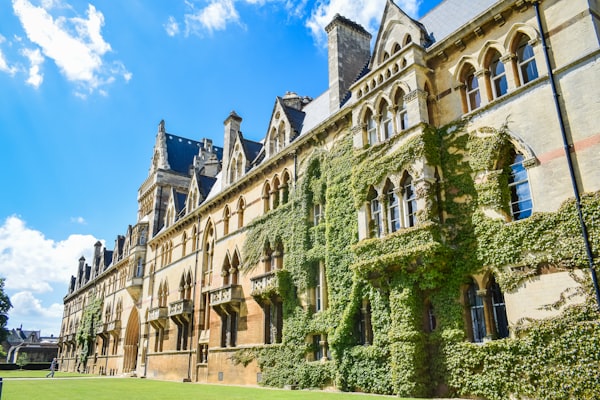
Université Grenoble Alpes
Université Paris Cité
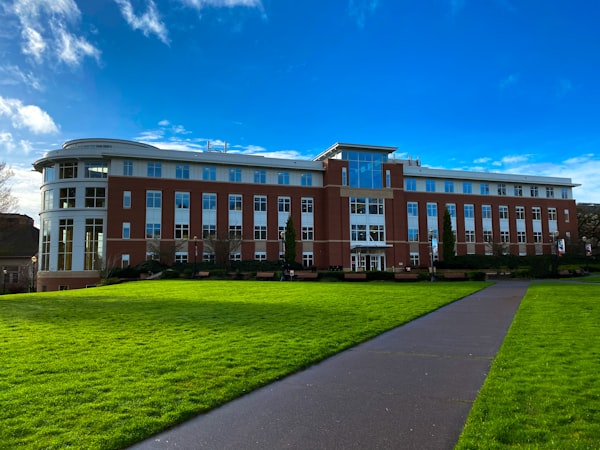
Aix-Marseille Université
Université de Strasbourg
Université de Bordeaux
Université Paul Sabatier (Toulouse)
Institut Polytechnique de Paris
École Polytechnique
ENS Paris (Ulm)
Université Paris-Saclay
Sorbonne Université
ENS Lyon
Université Grenoble Alpes
Université Paris Cité
Aix-Marseille Université
Université de Strasbourg
Université de Bordeaux
Université Paul Sabatier (Toulouse)
Institut Polytechnique de Paris
6 Reasons France
Is the World's
Physics Capital
No country combines Nobel heritage, CERN access, world-class research facilities, and affordable public education the way France does. Here is why.
55 Nobel Prizes in Physics
France has produced 55+ Nobel Prize winners in Physics - the 3rd highest count globally. From Henri Becquerel's discovery of radioactivity to Serge Haroche's work on quantum optics, French physics institutions have shaped every major era of modern physics. Indian students study in classrooms where Nobel-winning research was conceived.
CERN, CEA & CNRS - Global Research Powerhouses
France is the 2nd largest contributor to CERN (the European Organization for Nuclear Research), home to CEA (Commissariat à l'énergie atomique - France's nuclear and quantum research agency), and CNRS - the world's largest fundamental research organisation. MSc students get direct access to world-class experimental facilities.
Airbus, Thales, Safran & ITER
France's physics industry spans aerospace (Airbus, Safran), defence optics (Thales), nuclear energy (EDF, Framatome), and the ITER fusion reactor project in Cadarache. These companies recruit physics graduates directly from partner universities through mandatory paid internships.
Grenoble - Europe's Physics Valley
Grenoble hosts ESRF (European Synchrotron Radiation Facility), ILL (Institut Laue-Langevin - the world's most intense neutron source), and CNRS-affiliated labs. It is Europe's densest concentration of physics research - and Université Grenoble Alpes gives Indian students direct access at public university fees.
Mandatory Paid Research Internships
Every MSc in Physics in France includes a mandatory stage de recherche (research internship) of 4-6 months in a CNRS, CEA, or industry lab - typically paid at minimum SMIC wage (€11.88/hour). You graduate with real European laboratory experience, not just coursework.
Quantum Computing & Photonics Frontier
France is investing €1.8 billion in its national quantum strategy. Paris-Saclay, Grenoble, and IP Paris are at the forefront of quantum computing, quantum cryptography, and photonics research - fields with explosive industry demand. Physics graduates from these programs enter one of Europe's fastest-growing job markets.
Physics Programs
- by School
Select a school to explore its programs and USPs. Also browse related STEM programs: Mathematics, Aerospace Engineering, Computer Science and Renewable Energy.
École Polytechnique
Top 5 Europe
Programs Offered
Why École Polytechnique
Ready to apply to École Polytechnique?
What Indian Students
Need to Qualify
These are baseline criteria. Our counsellors assess your profile individually and tell you exactly where you stand.
Academic Background
BSc in Physics, Engineering Physics, Applied Physics, or a closely related field with strong math. Most programs accept 60%+ (CGPA 6.0+). Top schools like ENS Paris and École Polytechnique expect 75%+ with outstanding mathematical ability. A strong foundation in classical mechanics, quantum mechanics, electrodynamics, and statistical physics is essential.
English Proficiency
IELTS 6.0-6.5 (no band below 5.5) or TOEFL iBT 80-90+ for most international MSc tracks. ENS Paris and Paris-Saclay's top programs may require IELTS 6.5+. Students from English-medium Indian universities (IITs, NITs, IISER, central universities) often qualify for waiver with a Medium of Instruction certificate.
Research & Mathematical Background
Research experience is highly valued - undergraduate projects, summer internships at national labs (TIFR, IISc, IUCAA), publications, or science competition rankings significantly strengthen applications. Strong mathematical skills (linear algebra, complex analysis, differential equations) are essential for all top programs.
GRE / GATE
Not required by most French universities. However, a strong GRE Physics subject test score or a good GATE rank in Physics can strengthen applications to competitive programs at Polytechnique and ENS. Indian students with JEST/GATE/JAM qualifications are well-regarded.
Documents Required
Statement of Purpose (1-2 pages, research-focused - describe specific physics interests and any lab experience), 2-3 Letters of Recommendation (at least 1 from a physics professor), transcripts, CV, passport copy, and any research publications or posters. For Charpak Scholarship: separate motivation letter required - avoid AI-generated content.
Not sure if you qualify? Our counsellors do a profile analysis and tell you which schools you can get into - and what it takes to strengthen your application.
When to Apply for MSc Physics
in France
French universities follow structured admissions with fixed deadlines. Applying early gives you the best chance at scholarships and preferred lab placements.
September / Fall Intake
Primary Intake - Most Programs
Round 1 (Early)
Best scholarship chances
Round 2 (Regular)
Main application window
Round 3 (Late)
Limited seats, fewer scholarships
Classes Begin
Orientation typically starts late August
January / Spring Intake
Select Programs Only
Applications Open
Fewer schools offer Jan intake
Application Deadline
Rolling admissions at most schools
Visa Processing
Allow 6-8 weeks for Campus France
Classes Begin
Some schools start late January
Pro tip: Apply in Round 1 (October-December) for the September intake. This gives you the highest scholarship allocation, preferred lab placements, and ample time for visa processing through Campus France.
Top programs at ENS Paris, Polytechnique, and Paris-Saclay have strict deadlines and limited seats. Don't wait for Round 3 unless you have no other option.
Masters in Physics in France
- Tuition Fees
Part-time work (20 hrs/week permitted) significantly offsets living costs of €800-€1,100/month.
| University | Total Tuition (Approx.) |
|---|---|
| École Polytechnique | ₹12 - 18 lakhs |
| ENS Paris (Ulm) | ₹3 - 5 lakhs |
| Université Paris-Saclay | ₹3 - 6 lakhs |
| Sorbonne Université | ₹3 - 6 lakhs |
| ENS Lyon | ₹3 - 5 lakhs |
| Université Grenoble Alpes | ₹3 - 5 lakhs |
| Université Paris Cité | ₹3 - 6 lakhs |
| Aix-Marseille Université | ₹3 - 5 lakhs |
| Université de Strasbourg | ₹3 - 6 lakhs |
| Université de Bordeaux | ₹3 - 5 lakhs |
| Institut Polytechnique de Paris | ₹10 - 16 lakhs |
| Université Paul Sabatier | ₹3 - 5 lakhs |
← Scroll horizontally →
Total Budget Estimate
Scholarship Tip
The Eiffel Excellence Scholarship covers full tuition, travel & accommodation. The ENS International Selection offers a full 3-year scholarship at one of the world's most prestigious physics institutions.
*Fees are approximate and change each intake. Contact our counsellors for current, scholarship-adjusted figures.
Scholarships for Physics
in France

Excellence Eiffel Scholarship

Charpak Excellence Masters

ENS International Selection

Paris-Saclay International Scholarship
IDEX & LabEx Scholarships
IP Paris Excellence Scholarship
Scholarship availability changes each intake cycle. Our team tracks these in real-time - speak to us before you apply.
We've lived this
journey.
We walk it with you.
We've stood where you are - uncertain, hopeful, and afraid of getting it wrong.
What began as our own journey to France became a promise to guide others with honesty, not pressure. Our founders don't just know about France - they live in Europe. Our student ambassador, Mr. Ajayen, studied in Paris and lives and works there today.
He didn't read about the experience online. He lived it. That means when you talk to us, you get reality - not a sales pitch built on brochures. We tell you what university interviews feel like. What the visa process actually requires. What living in France actually costs. What you'll miss about India, and what you'll love about France.
"We are always there to help or guide you - anytime - from India to France, forever."
- StudyFrance Founders & Team, Europe
Our End-to-End Services
University Selection & Shortlisting
We match you with the right schools based on your profile, budget, and career goals - not what's easiest to sell.
Application & SOP Crafting
Our team has reviewed hundreds of successful applications to Polytechnique, ENS Paris, Paris-Saclay, and more. We know what works.
Scholarship Guidance
We track all scholarship cycles and help you apply for every opportunity you qualify for - government and school-level.
Visa Support - Zero Guesswork
France visa applications can be complex. We guide you through every document, every step, with zero confusion.
Pre-Departure & Settlement Support
From accommodation hunting in Paris to setting up your French bank account - before and after you land.
Ongoing Mentorship - Always
Our student ambassador in Paris and our France alumni network are always a WhatsApp message away, for as long as you need us.
Career Prospects After
Physics in France
Physics graduates from French universities enter one of Europe's most dynamic job markets. France's €1.8 billion national quantum strategy, the ITER fusion project, and massive investment in aerospace and nuclear energy create sustained demand for physics talent.
Starting salaries for physics graduates from top French universities range €35,000-€70,000 per year (₹31-62 lakhs), with senior R&D roles reaching €130,000+ within 10 years. Quantum engineers and nuclear physicists command the highest premiums.
The 2-year APS visa creates a powerful window for Indian students: gain European research and industry experience before deciding your long-term path. Many physics graduates continue to PhDs at CERN, Max Planck, or stay in France with CNRS doctoral contracts paying €2,100/month.
| Job Role | Annual Salary |
|---|---|
| Research Physicist (CNRS/CEA) | €35,000 - €50,000 |
| Quantum Engineer | €45,000 - €70,000 |
| Data Scientist (Physics background) | €42,000 - €62,000 |
| Optical / Photonics Engineer | €38,000 - €55,000 |
| Nuclear Engineer (EDF/Framatome) | €42,000 - €65,000 |
| Aerospace Physicist (Airbus/Safran) | €40,000 - €60,000 |
| R&D Director (10+ yrs) | €75,000 - €130,000 |
← Scroll horizontally →
Your Physics
Questions, Answered.
Everything Indian students ask us before deciding to study Physics in France.
Absolutely. France has 55+ Nobel Prizes in Physics - 3rd highest globally. Public university fees start at just €601/year (compared to £25,000+ in UK), with mandatory paid research internships at CNRS, CEA, CERN, and companies like Airbus and Thales. The 2-year APS work visa, Eiffel and Charpak scholarships, and access to facilities like ESRF, ILL, and ITER make France unmatched for physics students. Indian IIT, IISER, and NIT graduates are well-regarded by top French programs.
Ready to Explore
The Universe?
Whether you're just exploring or ready to apply - our Paris-based team walks every step with you. From India. To France. Forever.