
Why Study Economics
in France?
A Masters in Economics in France places you at the intellectual epicentre of modern economic thought. France is not just a country that teaches economics \u2014 it is a country that creates it.
Jean Tirole won the Nobel Prize in 2014 for his work on market power and regulation \u2014 research conducted entirely at the Toulouse School of Economics. Esther Duflo, trained at PSE, won the Nobel in 2019 for her experimental approach to alleviating poverty. Thomas Piketty, also at PSE, wrote the most influential economics book of the 21st century.
For Indian students, France offers what no other country can: world-class economics education at near-zero tuition. Public universities charge just \u20ac243\u2013\u20ac500 per year. Even elite institutions like TSE and PSE cost a fraction of comparable UK or US programs. Add a 2-year post-study work visa, and France becomes the smartest economics investment you can make.
Quick Comparison
France vs UK vs USA

Toulouse School of Economics
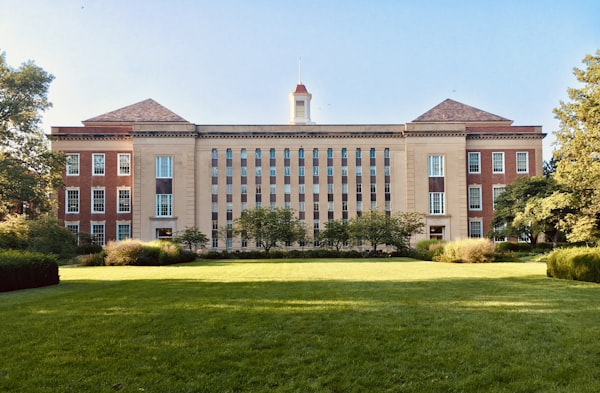
Paris School of Economics
Sciences Po

HEC Paris
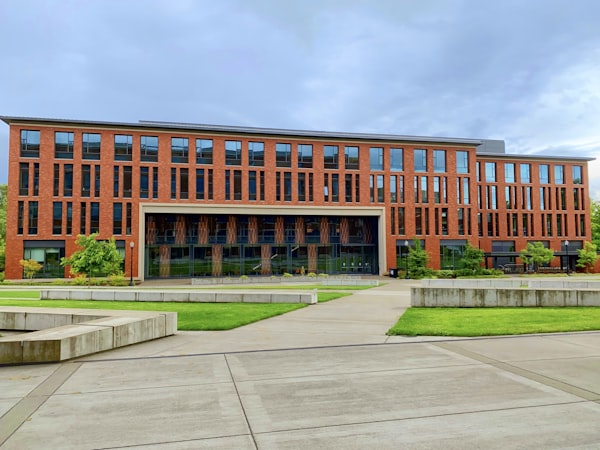
ESSEC Business School
Sorbonne Université
Université Paris-Saclay

Université Paris Dauphine
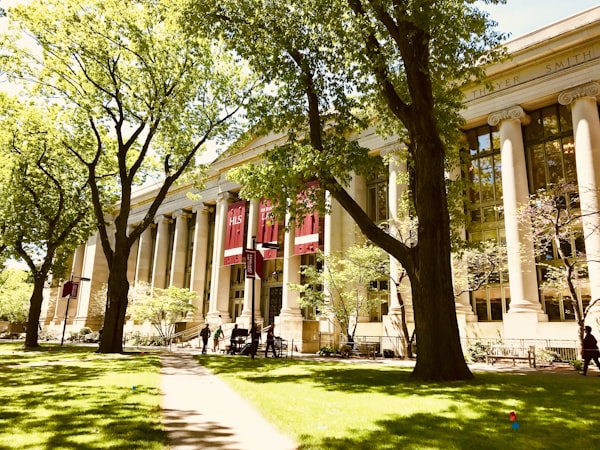
ENSAE ParisTech
Ecole Polytechnique
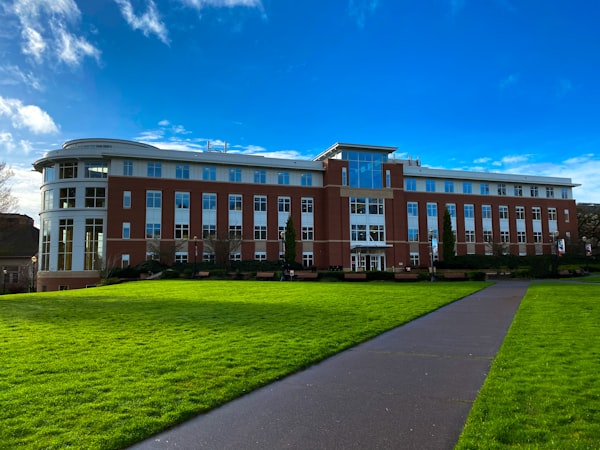
Aix-Marseille Université

Université de Strasbourg
Toulouse School of Economics
Paris School of Economics
Sciences Po
HEC Paris
ESSEC Business School
Sorbonne Université
Université Paris-Saclay
Université Paris Dauphine
ENSAE ParisTech
Ecole Polytechnique
Aix-Marseille Université
Université de Strasbourg
6 Reasons France Is
the World Capital of
Economics Education
No country produces more Nobel-calibre economic research than France. Here is what makes studying economics in France a categorically different \u2014 and better \u2014 decision.
Nobel Prize Factory
France produced Jean Tirole (2014) and Esther Duflo (2019) — two of the most influential economists alive. Thomas Piketty's 'Capital in the 21st Century' reshaped global policy. No country produces more impactful economic thought per capita.
TSE = World's #1 in Economics Research
Toulouse School of Economics ranks #1 globally for economics research output (RePEc). PSE, founded by Piketty, is a powerhouse for development economics and inequality studies. These are not just schools — they are institutions that shape global policy.
Direct Pipeline to IMF, OECD & ECB
Paris hosts the OECD, UNESCO, and major EU policy institutions. Sciences Po and PSE graduates regularly join the IMF, World Bank, European Central Bank, and Banque de France — career paths rarely available from UK or US programs.
Public University = Near-Free Tuition
France's public universities charge just €243–€500 per year for Master's degrees. Even elite institutions like TSE and PSE charge €4,000–€8,000 — a fraction of UK (£20,000+) or US ($50,000+) programs of equal calibre.
2-Year Post-Study Work Visa
France's APS permit gives you the right to live and work in France after graduation, with full Schengen zone access — a direct path to European careers in policy, consulting, and central banking.
Quantitative Edge for Global Careers
French economics programs are intensely quantitative — econometrics, mathematical economics, and data science are core. Graduates from ENSAE and Polytechnique are hired by Goldman Sachs, McKinsey, and the ECB alike.
Economics Programs in France
\u2014 by School
Select a school to explore its programs and USPs. Also browse related programs: Masters in Finance, Data Science, Management and Public Policy.
TSE
#1 Research
Programs Offered
Why TSE
Ready to apply to TSE?
What Indian Students
Need to Qualify
These are baseline criteria. Our counsellors assess your profile individually and tell you exactly where you stand.
Academic Score & Accepted Degrees
Bachelor's degree in Economics, Mathematics, Statistics, or a quantitative discipline. PSE and ENSAE expect 80%+ (CGPA 8.0+). TSE and HEC Paris accept 75%+. Sciences Po and Dauphine-PSL work with 70%+. Public universities like Sorbonne and Paris-Saclay accept 65%+.
GRE / GMAT
GRE is strongly recommended for TSE, PSE, and ENSAE. A quantitative score of 165+ significantly strengthens applications. HEC Paris accepts GMAT 650+. Several public universities waive standardised tests. Plan to take the GRE 4-6 months before your application deadline.
English Proficiency
IELTS 6.5 (no band below 6.0) or TOEFL iBT 90+. No French language requirement for English-taught programs. Students from English-medium Indian colleges often qualify for waivers. Almost every top economics program requires English proficiency without exception.
Work Experience
Not strictly mandatory - most MSc programs accept fresh graduates with 0-2 years of experience. However, research assistant roles, published or working research papers, internships at think tanks, central banks, or consulting firms significantly strengthen your application at PSE, TSE, and ENSAE.
Documents Required
Statement of Purpose (1-2 pages, essay-style), 2-3 Letters of Recommendation (1 academic + 1 professional preferred), updated CV highlighting research papers, econometrics projects, or RA positions, all academic transcripts, passport copy, and any relevant research portfolio. Important: Charpak Scholarship SOPs are checked for plagiarism and AI-generated content is now flagged - always write your own.
Not sure if you qualify? Our counsellors do a profile analysis and tell you which schools you can get into \u2014 and what it takes to strengthen your application.
When to Apply for MSc Economics
in France
French business schools follow a rolling admissions model. Applying early gives you the best chance at scholarships and preferred campus choices.
September / Fall Intake
Primary Intake - Most Programs
Round 1 (Early)
Best scholarship chances
Round 2 (Regular)
Main application window
Round 3 (Late)
Limited seats, fewer scholarships
Classes Begin
Orientation typically starts late August
January / Spring Intake
Select Programs Only
Applications Open
Fewer schools offer Jan intake
Application Deadline
Rolling admissions at most schools
Visa Processing
Allow 6-8 weeks for Campus France
Classes Begin
Some schools start late January
Pro tip: Apply in Round 1 (October-December) for the September intake. This gives you the highest scholarship allocation, more campus choices, and ample time for visa processing through Campus France.
Most top schools like HEC Paris, ESSEC, and ESCP fill their seats by Round 2. Don't wait for Round 3 unless you have no other option.
Masters in Economics in France
\u2014 Tuition Fees
Part-time work (20 hrs/week permitted) significantly offsets living costs of \u20ac800\u2013\u20ac1,200/month.
| University | Tuition (Approx.) |
|---|---|
| TSE (Toulouse School of Economics) | €4,000 – €8,000/yr |
| PSE (Paris School of Economics) | €4,500 – €7,500/yr |
| Sciences Po Paris | €0 – €14,500/yr* |
| HEC Paris | €20,000+/yr |
| ESSEC Business School | €18,000 – €22,000/yr |
| Sorbonne Université | €243 – €500/yr |
| Université Paris-Saclay | €243 – €500/yr |
| Université Paris Dauphine-PSL | €243 – €4,000/yr |
| ENSAE ParisTech | €2,500 – €6,000/yr |
| Ecole Polytechnique | €6,000 – €12,000/yr |
| Aix-Marseille Université | €243 – €500/yr |
| Université de Strasbourg | €243 – €500/yr |
← Scroll horizontally →
Total Budget Estimate
Scholarship Tip
The Eiffel Scholarship covers full tuition + \u20ac1,181/month living allowance. Sciences Po's \u00c9mile Boutmy covers up to 100% tuition for non-EU students.
*Fees are approximate and change each intake. Sciences Po uses income-based sliding scale. Contact our counsellors for current figures.
Scholarships for Economics in France

Excellence Eiffel Scholarship

Charpak Excellence Masters

TSE Merit Scholarships

Émile Boutmy Scholarship
PSE Financial Aid
HEC Foundation Scholarships
Scholarship availability changes each intake cycle. Our team tracks these in real-time \u2014 speak to us before you apply.
We've lived this
journey.
We walk it with you.
We've stood where you are \u2014 uncertain, hopeful, and afraid of getting it wrong.
What began as our own journey to France became a promise to guide others with honesty, not pressure. Our founders don't just know about France \u2014 they live in Europe. Our student ambassador, Mr. Ajayen, studied in Paris and lives and works there today.
He didn't read about the experience online. He lived it. That means when you talk to us, you get reality \u2014 not a sales pitch built on brochures. We tell you what university interviews feel like. What the visa process actually requires. What living in France actually costs. What you'll miss about India, and what you'll love about France.
"We are always there to help or guide you \u2014 anytime \u2014 from India to France, forever."
\u2014 StudyFrance Founders & Team, Europe
Our End-to-End Services
University Selection & Shortlisting
We match you with the right schools based on your profile, budget, and career goals — not what's easiest to sell.
Application & SOP Crafting
Our team has reviewed hundreds of successful applications to TSE, PSE, Sciences Po, HEC, and more. We know what works.
Scholarship Guidance
We track all scholarship cycles and help you apply for every opportunity you qualify for — government and school-level.
Visa Support — Zero Guesswork
France visa applications can be complex. We guide you through every document, every step, with zero confusion.
Pre-Departure & Settlement Support
From accommodation hunting in Paris to setting up your French bank account — before and after you land.
Ongoing Mentorship — Always
Our student ambassador in Paris and our France alumni network are always a WhatsApp message away, for as long as you need us.
Career Prospects After
Economics in France
France-trained economists work at the intersection of policy, finance, and research. Paris hosts the OECD, UNESCO, and major EU institutions \u2014 creating a direct pipeline for economics graduates into international policy careers.
Quantitative analysts from ENSAE and Polytechnique are recruited by Goldman Sachs, BNP Paribas, and Soci\u00e9t\u00e9 G\u00e9n\u00e9rale. TSE and PSE graduates join the ECB, Banque de France, IMF, and World Bank.
The 2-year APS visa creates a powerful window for Indian students: gain European work experience in economics, policy, or finance before deciding your long-term path. StudyFrance alumni have built careers in Paris, Brussels, Geneva, and London.
| Job Role | Annual Salary |
|---|---|
| Economist | €45,000 – €70,000 |
| Policy Researcher | €40,000 – €58,000 |
| Quantitative Analyst | €55,000 – €85,000 |
| Economic Consultant | €42,000 – €65,000 |
| Central Bank Analyst | €48,000 – €72,000 |
| Development Economist | €38,000 – €55,000 |
| Data Economist | €45,000 – €68,000 |
← Scroll horizontally →
Your Economics Questions,
Answered Honestly.
Everything Indian students ask us before deciding to study Masters in Economics in France.
Absolutely. France is home to two recent Nobel laureates in economics (Jean Tirole and Esther Duflo), the world's #1 economics research department (TSE), and institutions like PSE founded by Thomas Piketty. Public university fees are just €243–€500/year, and you get a 2-year post-study work visa. For Indian students seeking careers in policy, research, or quantitative finance, France offers unmatched value.
Ready to Study Economics
in France?
Whether you're aiming for TSE, PSE, or Sciences Po \u2014 our Paris-based team walks every step with you. From India. To France. Forever.