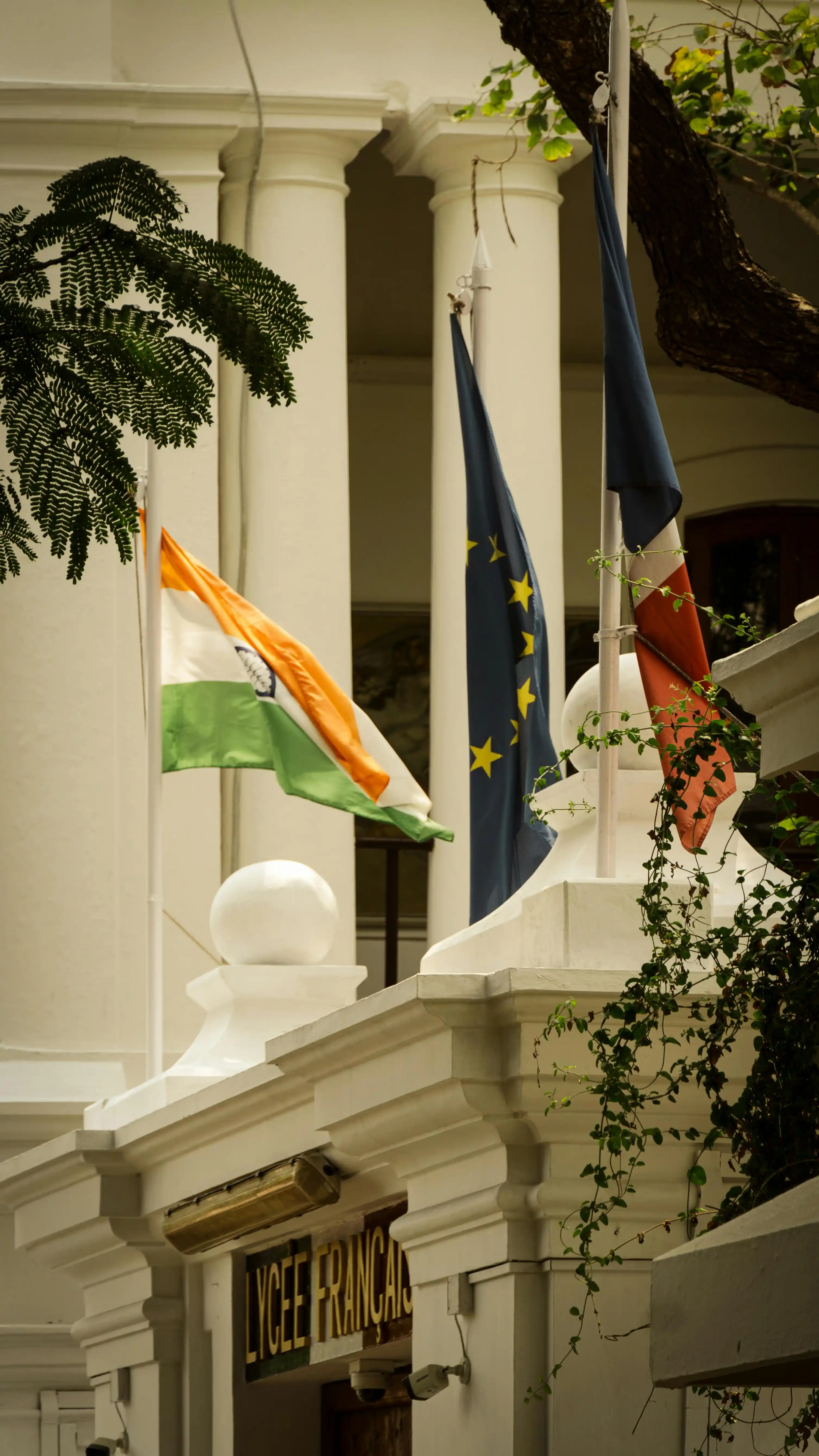



France and Germany are the two heavyweight study destinations in continental Europe for Indian students - and for good reason. Both offer world-class education at a fraction of US/UK costs, strong post-study work visas, clear PR pathways, and massive economies with genuine job opportunities. But they are fundamentally different in how their education systems work, what language they demand, how their job markets function, and what lifestyle they offer. This guide gives you an honest, field-by-field comparison so you can make the right choice for your specific situation.
Quick Answer - France or Germany?
There is no universal winner - it depends on your field and priorities. Germany wins for: pure engineering (automotive, mechanical, manufacturing), computer science research, and students comfortable learning German. France wins for: aerospace, business/management, luxury/fashion, students who prefer more English-taught options, and faster PR (citizenship in 2 years with a French degree vs 6-8 years in Germany). Both charge near-zero tuition at public universities. Living costs are similar (€800-€1,200/month). Read on for the detailed breakdown.
Tuition Fees - Both Nearly Free, But Different
Tuition Fee Comparison
France
€243/year (~₹22,400)
Germany
€0-€300/year (semester fee)
Winner
Germany (marginally)
France
N/A
Germany
€1,500/semester for non-EU
Winner
France cheaper
France
€243-€3,770/yr (public) | €12K-€20K (private MSc)
Germany
€0-€300 (TU9 universities are public)
Winner
Germany for elite engineering
France
€10,000-€45,000/yr (HEC, INSEAD)
Germany
€15,000-€35,000/yr (WHU, Mannheim)
Winner
Similar - both expensive
France
€250-€600/year (LMDE/HEYME)
Germany
€1,200-€1,400/year (mandatory public)
Winner
France cheaper
France
€100 CVEC contribution
Germany
€150-€350 Semesterbeitrag (includes transit pass)
Winner
Germany (transit pass included)
The Real Cost Difference
On paper, Germany looks slightly cheaper (€0 vs €243). In practice, the difference is negligible - both are essentially free. The bigger financial difference is health insurance: Germany mandates public health insurance (~€110/month for students) while France's student insurance is much cheaper (€20-€50/month). However, Germany's Semesterbeitrag often includes a public transit pass (Semesterticket) worth €200-€400/semester, which France doesn't offer. Overall, the tuition difference between France and Germany is less than ₹1 lakh/year - your decision should be based on other factors.
Living Costs - Surprisingly Similar
Monthly Living Costs Comparison (in EUR and INR)
France (Paris)
€450-€650
France (Lyon/Toulouse)
€250-€400
Germany (Munich)
€450-€700
Germany (Berlin/Dresden)
€300-€450
France (Paris)
€200-€300
France (Lyon/Toulouse)
€150-€250
Germany (Munich)
€200-€300
Germany (Berlin/Dresden)
€150-€250
France (Paris)
€40 (Imagine R)
France (Lyon/Toulouse)
€25-€40
Germany (Munich)
€0 (Semesterticket)
Germany (Berlin/Dresden)
€0 (Semesterticket)
France (Paris)
€15-€25
France (Lyon/Toulouse)
€15-€25
Germany (Munich)
€15-€25
Germany (Berlin/Dresden)
€15-€25
France (Paris)
€20-€50
France (Lyon/Toulouse)
€20-€50
Germany (Munich)
€110
Germany (Berlin/Dresden)
€110
France (Paris)
€725-€1,075
France (Lyon/Toulouse)
€460-€765
Germany (Munich)
€775-€1,135
Germany (Berlin/Dresden)
€575-€835
France (Paris)
₹66K-₹99K
France (Lyon/Toulouse)
₹42K-₹70K
Germany (Munich)
₹71K-₹1.04L
Germany (Berlin/Dresden)
₹53K-₹77K
Housing Aid - France's Big Advantage
- ✓France offers CAF housing aid to ALL students (including international) - €100-€300/month back on your rent
- ✓Germany has no equivalent nationwide housing subsidy for international students
- ✓This single benefit can save Indian students €1,200-€3,600/year in France
- ✓See our [accommodation guide](/blog/student-accommodation-in-france-for-indian-students) for details on CAF and Visale
Language Requirements - The Biggest Difference
This is where France and Germany diverge most sharply - and it is often the deciding factor for Indian students.
Language Requirements Compared
France
1,600+ (France-wide)
Germany
1,800+ (DAAD database)
Winner for Indians
Similar numbers
France
Difficult but possible in Paris/business
Germany
Very difficult outside Berlin/Munich
Winner for Indians
France (slightly)
France
French (B2+) for most jobs
Germany
German (B2+) for most jobs
Winner for Indians
Tie - both require local language
France
Moderate - Romance language, logical grammar
Germany
Hard - 4 grammatical cases, gendered articles, compound words
Winner for Indians
France (French is easier)
France
Many universities offer FLE (French as Foreign Language)
Germany
Many universities offer DSH prep courses
Winner for Indians
Tie
France
8-12 months of regular study
Germany
12-18 months of regular study
Winner for Indians
France (faster)
The Language Reality Check
Both countries have plenty of English-taught Masters programmes. The issue is not studying - it is living and working. In Germany, daily life outside campus (landlords, bureaucracy, supermarkets, doctors) is significantly harder without German. In France, Paris is more English-friendly, and French bureaucracy increasingly offers English options. For jobs: both countries strongly prefer candidates who speak the local language at B2+. The key difference is learning speed - most Indian students find French easier to learn than German. If you are starting from zero in both languages, you will reach job-ready fluency in French faster. See our French language requirements guide and without IELTS guide.
Which Country Wins - Field by Field
This is the most important section. The right country depends heavily on what you want to study and where you want to work afterwards.
France vs Germany by Field of Study
France
ISAE-SUPAERO, ENAC, Airbus HQ in Toulouse
Germany
DLR research, some TU programmes
Verdict
France wins clearly - Airbus, Ariane, Dassault
France
Renault, Stellantis, Valeo
Germany
BMW, Mercedes, VW, Bosch, Siemens - world's auto capital
Verdict
Germany wins clearly
France
Polytechnique, CentraleSupélec, growing tech scene
Germany
TU Munich, RWTH Aachen, KIT - exceptional CS research
Verdict
Germany (slightly) - stronger CS research tradition
France
Paris-Saclay, Polytechnique, strong AI startup scene
Germany
TU Munich, Max Planck Institutes
Verdict
Tie - both excellent
France
HEC, INSEAD, ESSEC, ESCP - globally top-ranked
Germany
WHU, Mannheim, ESMT - good but smaller reputation
Verdict
France wins clearly
France
INSEAD (#1 global), HEC, ESSEC
Germany
WHU, Mannheim MBA
Verdict
France wins clearly - INSEAD alone
France
EDF, TotalEnergies, CEA - 70% nuclear power
Germany
Siemens Energy, renewable energy leaders
Verdict
France for nuclear, Germany for renewables
France
Grenoble (STMicro, Soitec)
Germany
Dresden (GlobalFoundries, Infineon, Bosch)
Verdict
Tie - different hubs
France
Vinci, Bouygues, Eiffage
Germany
Strong infrastructure sector
Verdict
Tie
France
Paris - global capital, LVMH, Kering, Hermès
Germany
Not a strength
Verdict
France wins - no contest
France
Sanofi, Institut Pasteur
Germany
Bayer, BioNTech, Roche (Basel nearby)
Verdict
Germany (slightly)
France
CNRS, CEA, strong but lower stipends
Germany
Max Planck, Fraunhofer, higher PhD stipends
Verdict
Germany - better funded PhDs
Job Market & Starting Salaries
Employment Outcomes Comparison
France
€33,000-€45,000
Germany
€45,000-€55,000
Notes
Germany pays 20-30% more for engineering
France
€35,000-€50,000
Germany
€40,000-€50,000
Notes
Similar for business
France
€38,000-€50,000
Germany
€48,000-€60,000
Notes
Germany's tech salaries are higher
France
2-year APS (job search)
Germany
18-month job search visa
Notes
France longer (2 yrs vs 18 months)
France
20 hrs/week at €11.65+/hr
Germany
120 full days or 240 half-days/year
Notes
France simpler (weekly limit vs annual)
France
~7.5%
Germany
~5.5%
Notes
Germany lower overall
France
Large - 50,000+ students
Germany
Very large - 70,000+ students
Notes
Both have strong communities
Salary vs Cost of Living
Germany's higher salaries look better on paper, but when adjusted for the higher health insurance costs, lack of CAF housing aid, and similar rent levels, the net disposable income difference is smaller than it appears. In Munich (Germany's highest-paying city), rent eats most of the salary premium. In smaller German cities (Dresden, Leipzig), salaries are lower but rent is cheap - similar to France's Toulouse or Rennes model. The real salary advantage for Germany is in automotive and pure software engineering roles.
PR & Citizenship - France Is Faster
Both countries offer clear pathways to permanent residency, but the timelines are dramatically different. This is one of France's strongest advantages and a major factor for Indian students planning long-term. See our detailed PR in France guide.
PR & Citizenship Pathway Comparison
France
APS - 2 years
Germany
Job search visa - 18 months
Difference
France: 6 months longer
France
Talent Passport (4 years, renewable)
Germany
EU Blue Card (4 years) or Work Permit
Difference
Similar
France
Carte de Résident - after 5 years total
Germany
Niederlassungserlaubnis - after 5 years
Difference
Same timeline
France
2 years of residence (with French degree)
Germany
6-8 years of residence
Difference
France: 4-6 years faster
France
Yes - India requires renouncing, but France allows it
Germany
Recently allowed (2024 reform)
Difference
Both allow from their side
France
€2,800/month (Talent Passport)
Germany
€45,300/year (Blue Card) or €41,042 (shortage occupation)
Difference
France lower threshold
France
French B1
Germany
German B1 + integration course
Difference
Similar
France's 2-Year Citizenship Fast Track
- ✓If you hold a French degree, you are eligible for French citizenship after just 2 years of residence in France
- ✓Germany requires 6-8 years of residence for citizenship (recently reduced from 8 to 6 with good integration)
- ✓This is a 4-6 year difference - one of the most significant advantages France offers
- ✓French citizenship = EU citizenship = right to live and work in all 27 EU countries + EEA
- ✓For Indian students planning to settle in Europe long-term, this timeline difference is often the deciding factor
Admission Process Comparison
Application Process - France vs Germany
France
Campus France (mandatory for Indians)
Germany
uni-assist (for most universities)
France
Campus France: ₹15,500 + university fees vary
Germany
uni-assist: €75 first + €30 each additional
France
Yes - Campus France interview (mandatory)
Germany
No interview (usually)
France
Transcripts, SOP, LORs, language proof
Germany
Transcripts, motivation letter, LORs, language proof
France
2-4 weeks
Germany
4-8 weeks (often slower)
France
No - show €10,530 in bank
Germany
Yes - €11,904 in blocked account (Sperrkonto)
France
Primarily September (some January)
Germany
October (winter) and April (summer)
Blocked Account - Germany's Extra Hurdle
Germany requires Indian students to deposit €11,904 (~₹10.95L) into a Sperrkonto (blocked account) before the visa is issued. You can only withdraw ~€992/month. France requires showing €10,530 (~₹10.5L) in a bank account but does NOT require a blocked account - the money stays in your Indian bank and is accessible. This means France requires less upfront capital commitment. See our cost of studying guide and Campus France guide.
Student Life & Lifestyle
Life in France
Rich cultural life - museums, cafés, cuisine, wine regions, Mediterranean coast. Strong emphasis on work-life balance (35-hour work week culture). Excellent food (including growing Indian restaurant scene in Paris, Lyon). Warm climate in south (Toulouse, Montpellier, Nice). Paris is one of the world's great cities but expensive. Smaller cities offer excellent quality of life at lower cost.
Life in Germany
Efficient, organised, punctual culture - systems work well. Excellent public transport. Strong beer and food culture (different from French cuisine). Colder climate overall. Berlin is vibrant and multicultural but not as 'beautiful' as Paris. Munich is expensive but stunning. Smaller cities (Aachen, Dresden, Freiburg) are very liveable. Large Indian community - easier to find Indian groceries and social networks.
Choose France If...
- ✓You want aerospace, business, luxury/fashion, or management
- ✓You prefer learning French over German (easier for most Indians)
- ✓Faster PR/citizenship is a priority (2 years vs 6-8)
- ✓You want CAF housing aid (€100-€300/month back)
- ✓You prefer warmer climate (southern France)
- ✓You are targeting consulting, luxury, or French MNCs
- ✓You don't want to deal with a blocked account (Sperrkonto)
- ✓You value the French lifestyle - food, culture, art, wine
Choose Germany If...
- ✗You want automotive, mechanical, or manufacturing engineering
- ✗You prefer higher starting salaries (€45K+ in engineering)
- ✗You are comfortable learning German or already know some
- ✗You want PhD with better stipends (Max Planck, Fraunhofer)
- ✗You prefer a more structured, efficient daily life
- ✗You are targeting German automotive giants (BMW, VW, Mercedes)
- ✗You want a larger Indian student community
- ✗You value punctuality and systematic processes
Can You Apply to Both?
Yes - and many Indian students do. There is no rule against applying to both France and Germany simultaneously. The application timelines overlap (both have September/October intakes), and you can register for both Campus France and uni-assist in parallel. Apply to both, compare your offers (university ranking, city, programme content, scholarship), and then decide. The only cost is the application fees (~₹15,500 for Campus France + €75+ for uni-assist). Given that both countries are nearly free for tuition, the decision should be based on programme fit, career goals, and lifestyle preference - not cost.
Frequently Asked Questions
Overall costs are very similar. Tuition is nearly zero in both. Germany has higher mandatory health insurance (~€110/month vs €20-€50/month in France) but includes a public transit pass in the semester fee. France offers CAF housing aid (€100-€300/month) which Germany does not. Germany requires a blocked account (€11,904 upfront) while France requires only a bank statement (€10,530). Net-net, France is slightly cheaper in total cost when you factor in CAF and lower insurance - but the difference is ₹1-2 lakh/year, not dramatic.
It depends on the field. Germany has a larger economy and lower unemployment, with stronger demand in automotive, manufacturing, and software engineering. France has stronger demand in aerospace, luxury, consulting, energy, and business. Both countries have post-study work visas (France: 2 years, Germany: 18 months). Germany pays higher starting salaries in engineering and CS, but France's CAF and lower insurance partially offset this. The key factor for jobs in both countries is local language proficiency - B2+ in French or German opens 3-4x more opportunities than English alone.
Most Indian students find French easier. French is a Romance language with relatively logical grammar (compared to German's 4 grammatical cases, 3 genders, and complex word order). French pronunciation is challenging but consistent once learned. German compound words and case system are the main difficulties. On average, Indian students reach B2 in French in 8-12 months of regular study, vs 12-18 months for German. That said, if you already have some German exposure (from school or Duolingo), that advantage matters more than theoretical difficulty.
Yes - both countries have clear PR pathways. France: study (2 yrs) → APS work visa (2 yrs) → Talent Passport (4 yrs) → Carte de Résident (10-yr PR) after 5 years total, with citizenship possible after just 2 years with a French degree. Germany: study (2 yrs) → job search visa (18 mo) → Blue Card (4 yrs) → Niederlassungserlaubnis after 5 years total, with citizenship after 6-8 years. France's citizenship fast-track (2 years with French degree) is significantly faster than Germany's pathway.
Both have 1,500+ English-taught Masters programmes. Germany has a slight edge in total numbers (DAAD database lists 1,800+), particularly in engineering and natural sciences. France has strong English-taught options in business, management, and at Grandes Ecoles. For engineering at public universities, Germany has more English-taught options. For business and management, France dominates. In practice, you will find English-taught programmes in almost any field in both countries.
Many French and German universities have bilateral exchange agreements. If you study in France, you can do a semester at a German partner university (and vice versa) through Erasmus+ or bilateral agreements. This gives you exposure to both countries. Some programmes (like the Franco-German University network) offer dual degrees from both a French and German institution. This is an excellent option if you genuinely cannot choose.
Need Help Choosing Between France and Germany?
Our team has helped hundreds of Indian students evaluate France vs Germany based on their specific field, budget, career goals, and language comfort. We can help you identify the right programmes, compare offers, and build an application strategy for France. Book a free consultation to discuss your options.